Explore our blog for helpful articles about UV safety, weather updates, and healthy outdoor living. Stay informed and make every sunny day a safe one!

Popular articles

Hurricanes are among the most powerful and destructive weather phenomena on Earth. With their swirling winds, torrential rains, and storm surges, hurricanes can cause devastating impacts on communities, infrastructure, and ecosystems. Understanding interesting facts about hurricanes not only satisfies curiosity but also helps people prepare and stay safe when these storms approach. In this post, we will explore the science, history, and fascinating aspects of hurricanes, providing both practical insights and surprising trivia.
What Are Hurricanes?
Before diving into interesting facts about hurricanes, it’s important to understand what they are. Hurricanes, also called tropical cyclones or typhoons in different parts of the world, are intense storms that form over warm ocean waters. They feature strong winds, heavy rainfall, and a characteristic low-pressure center called the eye. Hurricanes are classified by wind speed into categories ranging from 1 to 5 on the Saffir-Simpson scale, with Category 5 storms being the most destructive.
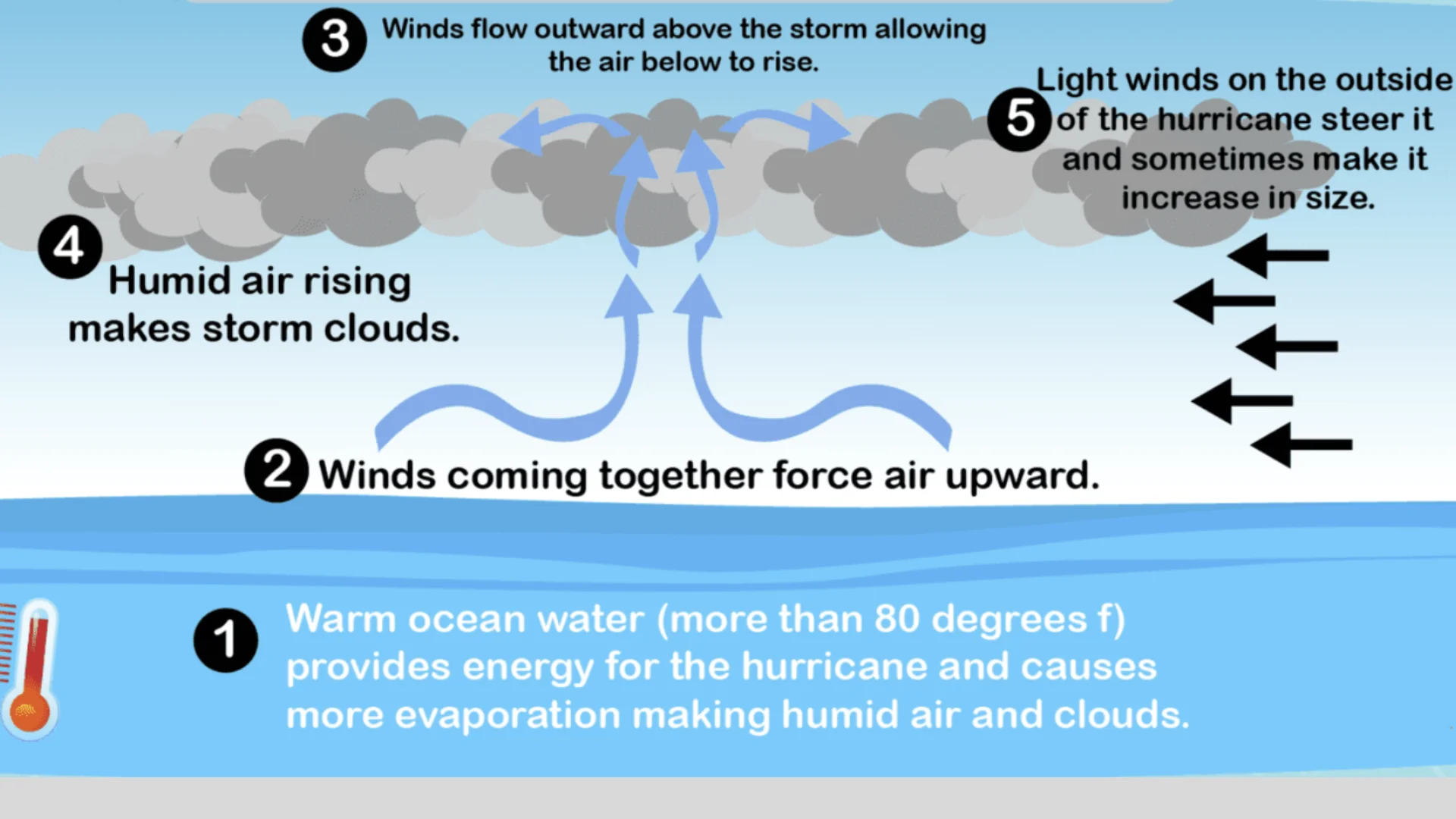
Hurricanes derive their energy from warm, moist air rising from the ocean. As this air rises and cools, it creates clouds, rain, and strong winds, fueling the storm system. Their formation depends on ocean temperatures, atmospheric conditions, and other factors, making hurricanes both predictable and unpredictable.
What You Might Not Know?
Here are some interesting facts about hurricanes that highlight the complexity and power of these storms:
- Hurricanes Can Be Enormous in Size
Some hurricanes can span hundreds of miles across. For example, Hurricane Sandy in 2012 stretched over 1,000 miles from end to end, affecting multiple countries at once. The sheer size of hurricanes means that even areas far from the storm’s center can experience strong winds and heavy rainfall. - The Eye of a Hurricane Is Calm
The eye, located at the center of the hurricane, is surprisingly calm and often clear. Winds here are minimal, and in some cases, the sky appears partly sunny. Surrounding the eye, however, is the eyewall, where the storm’s most destructive winds and intense rainfall occur. - Hurricanes Rotate Differently Depending on Hemisphere
Due to the Coriolis effect, hurricanes in the Northern Hemisphere rotate counterclockwise, while those in the Southern Hemisphere rotate clockwise. This fascinating phenomenon is a result of Earth’s rotation influencing wind patterns in large storm systems. - Hurricane Names Follow a Specific List
Hurricanes are given names to simplify communication and reduce confusion during multiple storms in a season. The World Meteorological Organization maintains rotating lists of names for each region, and particularly destructive hurricane names are retired out of respect for affected communities. - Hurricanes Can Produce Tornadoes
While hurricanes are massive systems, they can also spawn smaller, localized tornadoes. These tornadoes often form in the outer rainbands of hurricanes and can add to the storm’s overall destructive power. - Hurricanes are measured not only by wind speed but also by central pressure. Lower central pressure usually indicates a more powerful storm.
- The deadliest hurricane in U.S. history was the Galveston Hurricane of 1900(anchor), which killed an estimated 8,000 people.
- Hurricanes can last for days or even weeks while traveling across the ocean. Some storms, like Hurricane John in 1994, persisted for over a month.
- Hurricanes can move at varying speeds, from nearly stationary to over 30 miles per hour, affecting how quickly they impact coastal regions.
- Hurricanes can influence global weather patterns, including the monsoon and jet stream, affecting regions far from the storm’s origin.
Some Interesting Facts About Hurricanes in History
Throughout history, hurricanes have left lasting marks. Learning some interesting facts about hurricanes helps us understand their impact:
- The 1970 Bhola cyclone(anchor) in Bangladesh remains the deadliest tropical cyclone on record, with estimated fatalities exceeding 500,000.
- Hurricane Katrina in 2005 was one of the most costly hurricanes in U.S. history, causing over $125 billion in damage.
- Hurricanes are not a modern phenomenon; historical records and geological evidence indicate that these storms have occurred for thousands of years.
Ability to produce extreme weather conditions
Among the most interesting facts about hurricanes is their ability to produce extreme weather conditions. For instance:
- Rainfall totals in hurricanes can exceed 20 inches in a single day, leading to widespread flooding.
- The fastest wind speed recorded in a hurricane was 215 mph in Hurricane Patricia in 2015, making it one of the most intense storms ever observed.
- Hurricanes can significantly cool ocean surface temperatures due to the mixing of warm surface water with colder, deeper water as they pass over the sea.
Hurricanes and their environmental and ecological impact
If you ask what are interesting facts about hurricanes, it’s worth noting their environmental and ecological impact:
- Hurricanes can redistribute nutrients in the ocean, benefiting marine life in certain regions.
- They also play a role in balancing global temperatures by transferring heat from the tropics toward the poles.
- While destructive, hurricanes are natural parts of Earth’s climate system and have been occurring for millions of years.
Safety and Preparedness
Understanding interesting facts about hurricanes is not just about curiosity; it is also about safety. Communities in hurricane-prone areas prepare by:
- Monitoring hurricane forecasts and alerts issued by meteorological agencies.
- Strengthening buildings and infrastructure to withstand high winds and flooding.
- Developing evacuation plans and emergency kits to ensure survival during severe storms.
Hurricane preparedness saves lives and reduces property damage, demonstrating the importance of understanding these natural phenomena beyond just fascinating trivia.
Why Learning About Hurricanes Matters
Hurricanes are among nature’s most powerful and awe-inspiring storms. Knowing interesting facts about hurricanes allows us to appreciate their complexity, history, and impact on the environment and society. From the calm eye to the deadly storm surges, from massive wind speeds to historical catastrophes, hurricanes capture our attention and respect.
Whether you’re curious about what are some interesting facts about hurricanes?, what are interesting facts about hurricanes, or other interesting facts about hurricanes, learning about these storms helps us prepare for future events and understand the forces shaping our planet. By studying hurricanes, we gain insights into Earth’s climate, weather systems, and the remarkable power of nature itself.
Next time a hurricane forms over the ocean, take a moment to consider not just its destructive potential, but also the most interesting facts about hurricanes that make them one of the most fascinating weather phenomena on Earth.